
Updated September 21, 2026
A bedside table should make the first and last moments of the day easier. It needs to hold what you reach for, sit comfortably beside the mattress and feel at home with the rest of the bedroom. The right choice is not necessarily a matching pair or a conventional nightstand: it is the piece that works for your space and routine.
Before shopping, measure the bed and the available floor space, then decide what genuinely needs to live beside you. These steps will help you choose the right height, width, storage, lighting and style.
Start with the height of your bed
Measure from the floor to the top of the mattress with your usual bedding in place. A bedside surface at roughly the same height is generally comfortable to reach while lying down. A few centimetres either way can work; avoid a table so low that you have to stretch for a glass of water or so high that the lamp feels awkward.
Do not rely on the height of the bed frame alone. A deep mattress or topper changes the final sleeping height. If you are comparing tables online, check the overall height in the product dimensions and mark it against your bed with a tape measure.
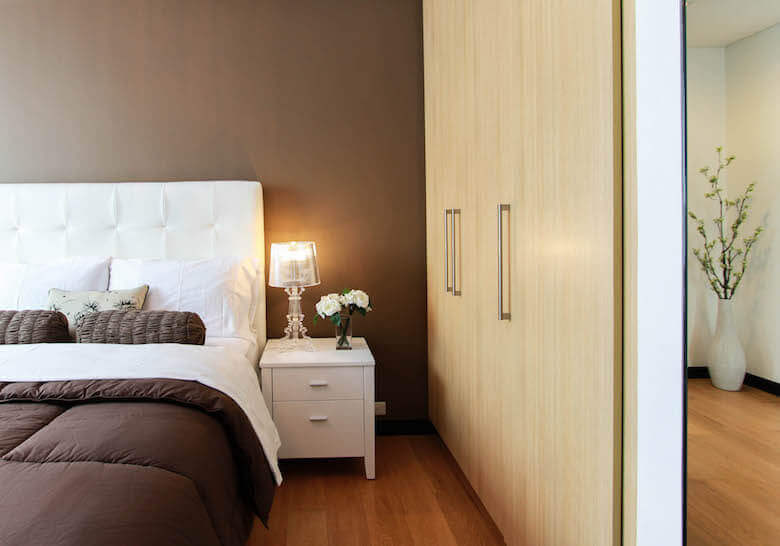
Choose a width that leaves room to move
Measure the gap between the bed and the wall, wardrobe or door. Leave enough clearance to open drawers and move around the bed without brushing against furniture. The table should have space for the objects you use each night, but it should not dominate the room or block a walkway.
In a compact bedroom, a narrow table, floating shelf or wall-mounted ledge can provide a useful landing place without taking up much floor area. In a larger room, a substantial nightstand may balance a wide bed or tall headboard. Two tables need not be identical, but similar visual weight often makes the arrangement feel considered.
Plan lighting before you buy
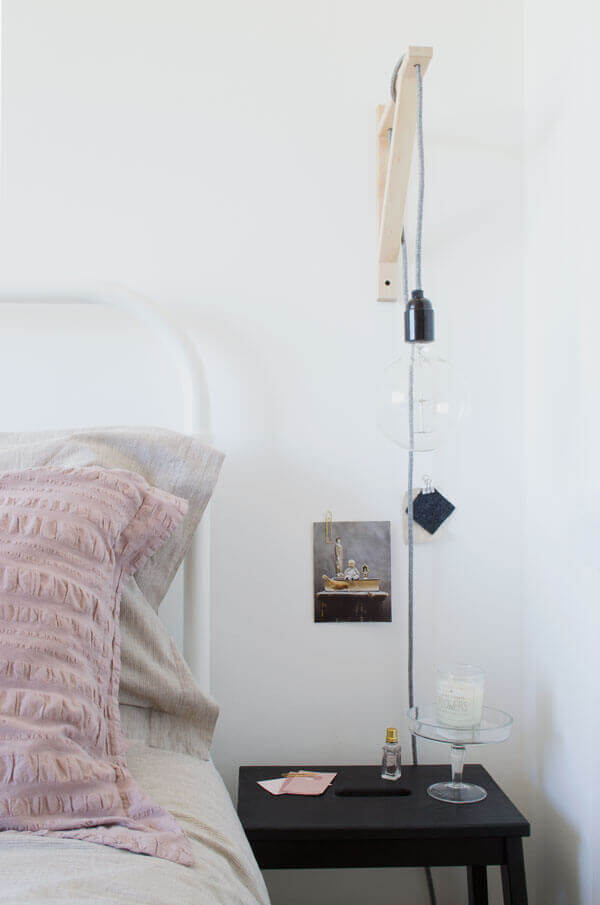
If the table will hold a lamp, measure the lamp base as well as the table top. There should still be room for a book, phone or glass. Place the switch within easy reach from bed, and check where the cable and socket will sit. A lamp that is beautiful but awkward to switch on is not doing its job.
For reading, test the light from your usual seated position rather than following a single universal lamp-height rule. A wall sconce or pendant can free the table surface in a small room; make sure its switch is just as convenient. Warm, directed light often feels more restful than a bright bulb shining across the whole room.
Pick storage to match your habits
Think about what should be visible and what you would rather put away. A drawer can hide glasses, chargers and other small items. An open shelf is handy for current books. A cupboard can conceal more, but check that its door has room to open. If all you keep beside the bed is a lamp and a glass, a simple shelf may be enough.
Choose storage you will actually use. A bulky cabinet with several empty drawers can make a small bedroom feel crowded, while a table with no storage may leave daily essentials scattered on top.
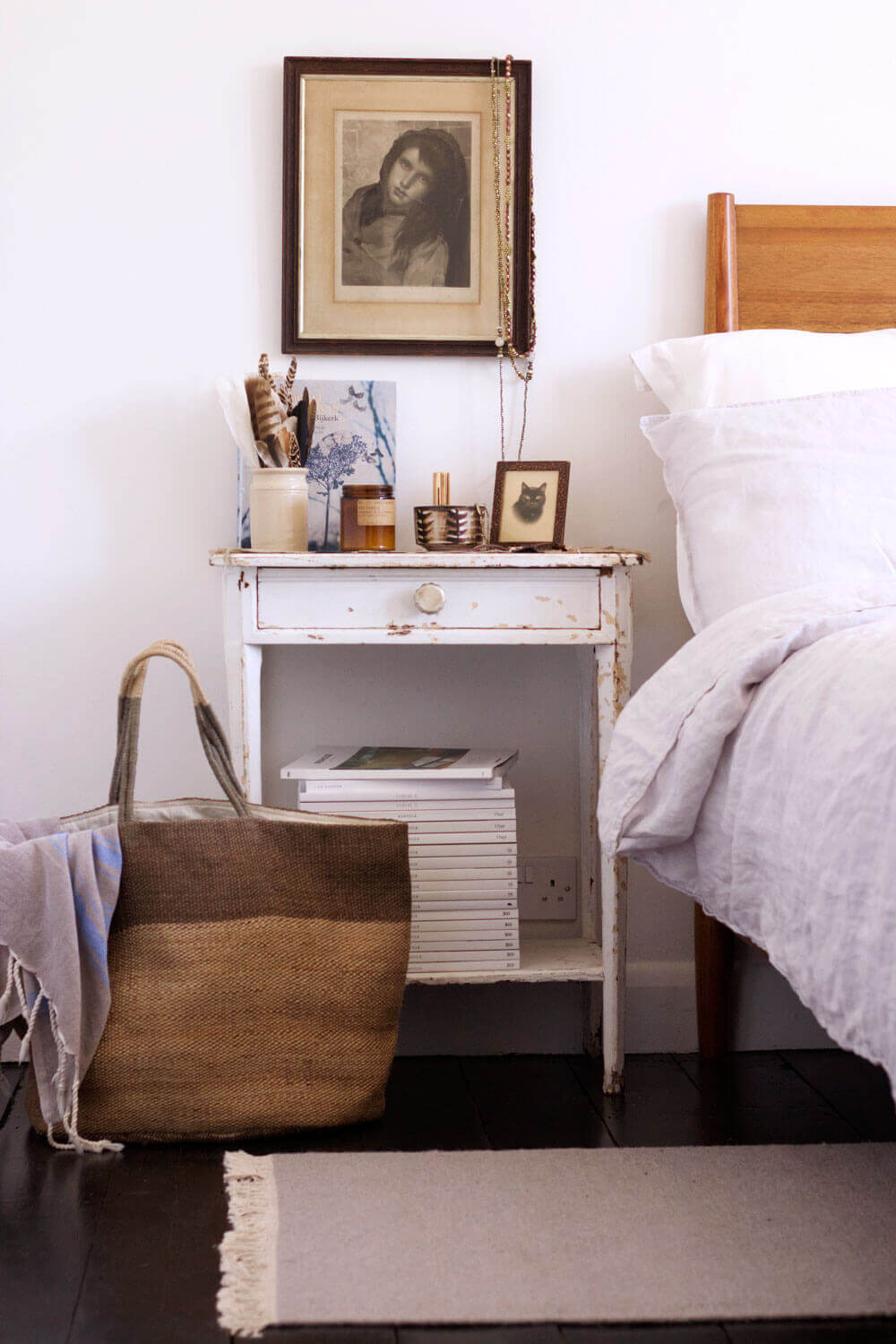
Consider the finish and upkeep
The bedside surface sees water glasses, hand cream and the occasional spill. Check how the finish should be cleaned and whether it needs a coaster. Untreated wood can mark more readily than a protected finish; glass shows fingerprints; textured surfaces may collect dust. None is automatically wrong—the best choice is one you are happy to care for.
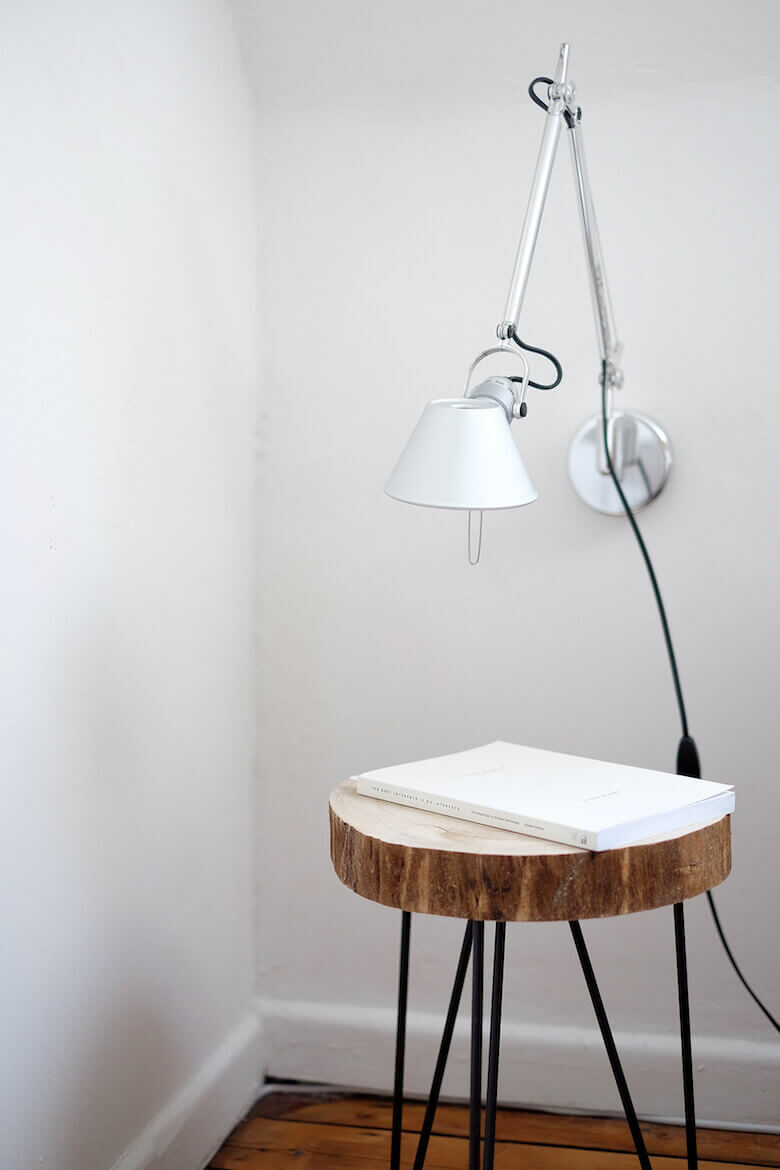
A table with stable legs and a solid top is especially important if you reach for the light in the dark. If you are considering a vintage chest, basket or repurposed stool, check that it is level and strong enough for the objects it will hold.
Match the mood, not necessarily the furniture
A matching pair brings symmetry, but different tables can look just as intentional. Repeat one element—material, colour, height or shape—so the two sides relate to one another. A painted table can add contrast; natural wood or woven details can bring warmth beside relaxed linen bedding.
Let the table support the room rather than compete with it. If the bed or headboard is already a strong feature, a simple bedside shape may be all you need. If the room is understated, a distinctive vintage piece can give it character.
A quick bedside-table checklist
- Measure floor-to-mattress height and the available width.
- Allow clearance for walking, doors and drawers.
- List the essentials the surface must hold.
- Check lamp size, socket position and switch reach.
- Choose storage and a finish that suit your habits.
- Check stability before using a repurposed piece.
Frequently asked questions
Should a bedside table be higher or lower than the bed? Aim for a surface close to mattress height. A small difference is fine if you can reach the top comfortably while lying down.
Do both bedside tables have to match? No. Matching pieces create symmetry, while a shared colour, material or similar height can tie different pieces together.
What can I use in a small bedroom? A narrow table, floating shelf or wall-mounted light can preserve floor space. Keep enough room to move and avoid blocking storage or doors.
How much storage do I need? Only enough for the items you want beside the bed. A drawer helps hide small essentials; a shelf works well for books; a clear top may be sufficient for a minimalist routine.