
Sustainable living is not about doing everything perfectly. It is about making thoughtful choices that use fewer resources, create less waste and fit into everyday life. Individual action cannot replace the wide-reaching change needed from governments and businesses, but the two can work together.
At LinenMe, we are aiming for zero waste in our linen textile production process and we use green energy. Linen also has qualities that support a slower way of living: it is naturally biodegradable, durable and made to be used for years.

What Does Sustainable Living Mean?
Sustainable living means considering the resources behind the things we buy and the waste they may leave behind. A useful place to start is with the decisions we make most often: how we heat and light our homes, how we use water, what we eat and what we bring into the house.
The most effective habits are usually simple enough to repeat. Choose a few changes that suit your home, then build on them over time.
Conserve Water at Home
Fresh water is precious, and small leaks or unnecessary use quickly add up. These practical steps can help reduce water use without making daily life complicated:
- Fix dripping taps and leaking pipes promptly.
- Run washing machines and dishwashers with full loads.
- Collect rainwater for plants where local conditions allow.
- Choose drought-resistant plants and avoid overwatering lawns.
- Ask water providers to address wasteful leaks in their systems.

Use Less Energy
Begin with the energy your home already uses. Improve insulation where possible, turn off lights and appliances that are not needed, and monitor heating rather than relying on guesswork. If renewable electricity or solar panels are realistic for your home, they can form part of a longer-term plan.
Natural daylight, curtains that help manage heat and simple seasonal adjustments can also make rooms more comfortable without reaching immediately for extra heating or cooling.
Shop More Mindfully
Mindful shopping starts before a purchase. Ask whether the item is needed, how often it will be used, what it is made from and whether it can be repaired or cared for easily.
- Buy fewer, better-made things that are designed to last.
- Choose timeless pieces rather than short-lived trends.
- Learn how a brand approaches materials, production and waste.
- Prefer reusable items over disposable alternatives where practical.
- Use what you already own before replacing it.
Our guide to mindful shopping offers more ideas for building a slower, more considered home and wardrobe.
Choose Natural, Long-Lasting Textiles
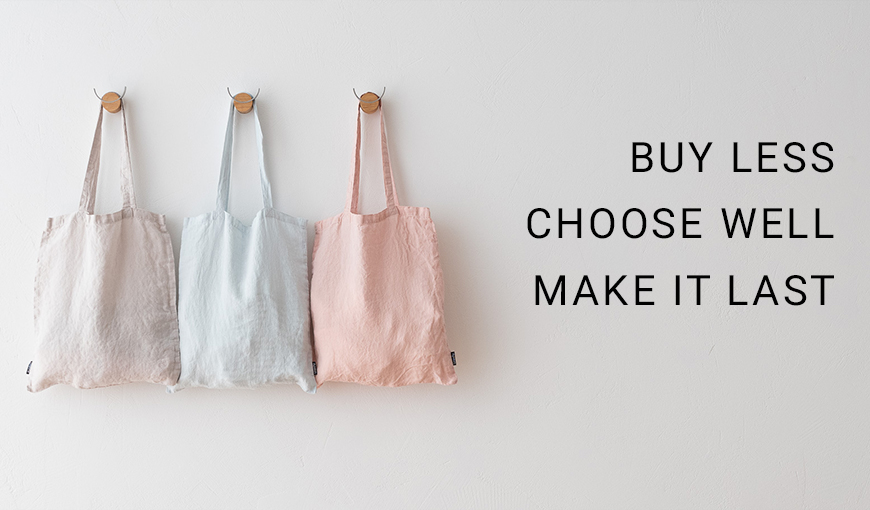
Textiles are part of daily life, so longevity matters. Choose materials that feel good to use, suit their purpose and can be cared for at home. Linen is strong, naturally biodegradable and becomes softer with use, which is why well-made linen pieces can remain useful for many years.
Caring for textiles well is just as important as choosing them. Wash only when needed, follow the care label and repair small signs of wear before they become bigger problems. Read more about why linen is a sustainable fabric.
Reduce Everyday Waste
Look first at the waste your household produces most often. Planning meals can reduce food waste, refillable containers can replace some single-use packaging, and reusable cloths, bags and napkins can take the place of disposable versions.
When something is no longer useful to you, consider repairing, repurposing, donating or recycling it before throwing it away. Progress is more valuable than perfection.
A Simple Sustainable Living Checklist
- Choose one water-saving habit to start this week.
- Review heating, lighting and appliance use at home.
- Pause before buying and choose quality over quantity.
- Care for clothes and home textiles so they last longer.
- Replace one disposable item with a reusable alternative.
- Support wider action by asking businesses and public bodies for responsible change.
A more sustainable lifestyle is built from repeatable choices and collective action. Start where you can, keep the changes that work, and let those habits grow.