
Updated: August 2026 — This article has been reviewed and refreshed for accuracy.
Wrinkles are part of linen’s natural character. Flax fibres have relatively low elasticity, so the fabric does not spring back from folds in the same way as many synthetic textiles. The result is a relaxed surface that softens and changes with use.
You can embrace that texture or create a smoother finish when the occasion calls for it. Neither approach changes the quality of the linen; it is largely a matter of preference and styling.
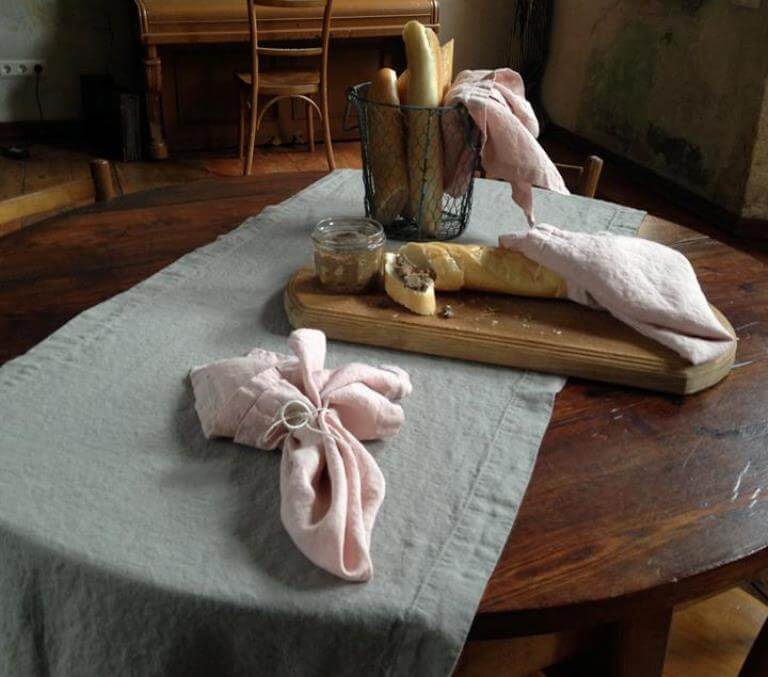
Why linen develops natural creases
Linen’s strength and crisp structure help it hold its shape, but they also make folds visible. Freshly washed linen may appear more textured, especially if it has been spun firmly, dried completely in a tumble dryer or left crumpled in the machine.
With repeated washing and use, many linen textiles become softer and drape more easily. This does not mean every piece improves indefinitely: gentle care, suitable temperatures and avoiding excessive abrasion still matter.
How to reduce wrinkles without ironing
- Do not overload the washing machine.
- Use a gentle cycle and moderate spin where the care label allows.
- Remove linen promptly when the cycle finishes.
- Shake each item and smooth seams and edges by hand.
- Hang or lay it flat in its natural shape while still damp.
- Fold or place it on the bed or table before it becomes completely dry.
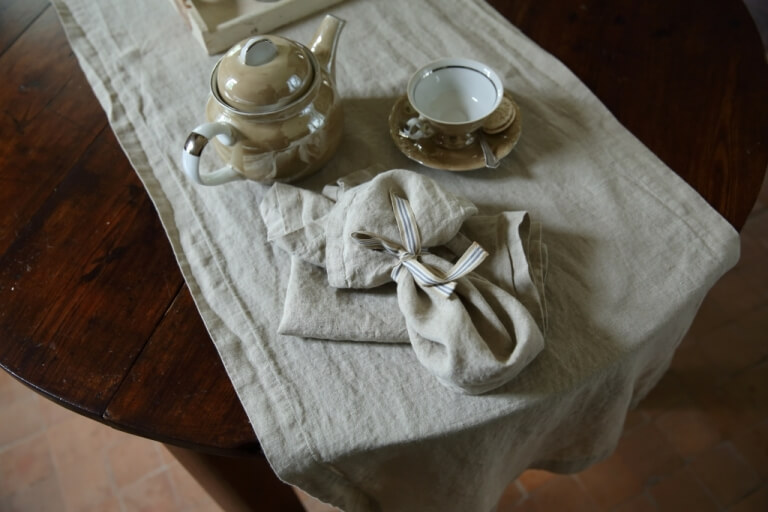
How to press linen safely
If you prefer a polished finish, iron the linen while it is still slightly damp or use steam at the temperature specified on the care label. Work from the reverse on dark colours to reduce shine and use a clean pressing cloth over embroidery or delicate finishes.
Avoid excessive pressure and do not iron stained fabric, because heat can make some marks more difficult to remove. Tablecloths and bedding do not need to be perfectly flat to look considered; a few soft creases can give the setting depth and informality.
Explore our linen table collection or read the complete guide to caring for linen fabric.