
Updated: August 2026 — This article has been reviewed and refreshed for accuracy.
Linen is often described as difficult to care for, but most modern linen clothing and household textiles are straightforward to maintain. Made from fibres of the flax plant, linen is naturally strong and often becomes softer and more comfortable with repeated washing.
Always begin with the care label, because construction, dyes, finishes, decorative details and fabric blends can change what is suitable for a particular item. The guidance below applies to washable modern linen rather than fragile antique textiles.
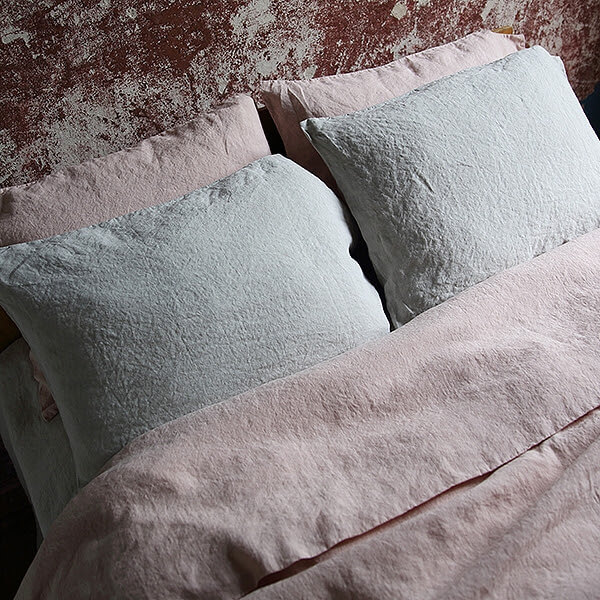
Does linen need to be dry cleaned?
In most cases, no. Properly manufactured linen can usually be washed by hand or machine and, where the label permits, tumble dried at a low temperature. More structured garments such as tailored jackets or suits may be better suited to professional cleaning because of their linings and construction.
Follow the instructions supplied with the item. Before using a new cleaning product or stain treatment, test it on a small, inconspicuous area.
Why choose linen instead of cotton?
Both linen and cotton can be easy to maintain. Linen fibres are particularly strong, and well-made linen often becomes softer with use rather than losing its character. Flax can also require fewer inputs than some other fibre crops, although the full environmental impact depends on farming, processing, manufacturing, transport and how long the finished product remains in use.
Durability matters: choosing a textile you will use and care for over many years can reduce the need for frequent replacement.

How should linen be washed?
Wash linen in cold or lukewarm water using a gentle cycle and a mild detergent. Separate light and dark colours, avoid overloading the drum and do not use chlorine bleach, which can weaken fibres and alter colour.
Fasten closures where appropriate and place delicate or embellished pieces in a laundry bag. The manufacturer’s instructions always take priority, especially for garments, blended fabrics and products with decorative details.
How should linen be dried?
Many linen items can be tumble dried at a low temperature when the care label allows it. Remove them while they are still slightly damp, shake them gently and finish drying on a hanger or laid flat. Excessive heat and over-drying can make the fabric feel stiff and may contribute to shrinkage.
Air drying is also suitable. Arrange the item in its natural shape and make sure it is completely dry before storing it.
Does linen need to be ironed?
No, unless you prefer a smoother finish. Natural creases are part of linen’s relaxed appearance. If you do want to iron it, work while the fabric is slightly damp and use steam at a temperature permitted by the care label.
Press dark colours from the reverse to reduce the risk of shine or surface marks. For embroidery or delicate details, use a clean pressing cloth and avoid excessive pressure.
How should linen be stored?
Store linen only when it is clean and completely dry. Choose a cool, dry, well-ventilated place away from direct sunlight and damp. Avoid sealed plastic bags, which can trap moisture, and avoid direct contact with untreated wood or acidic cardboard during long-term storage.
Fold items loosely and change the position of the folds occasionally. Air stored textiles before use and wash them if they need refreshing.
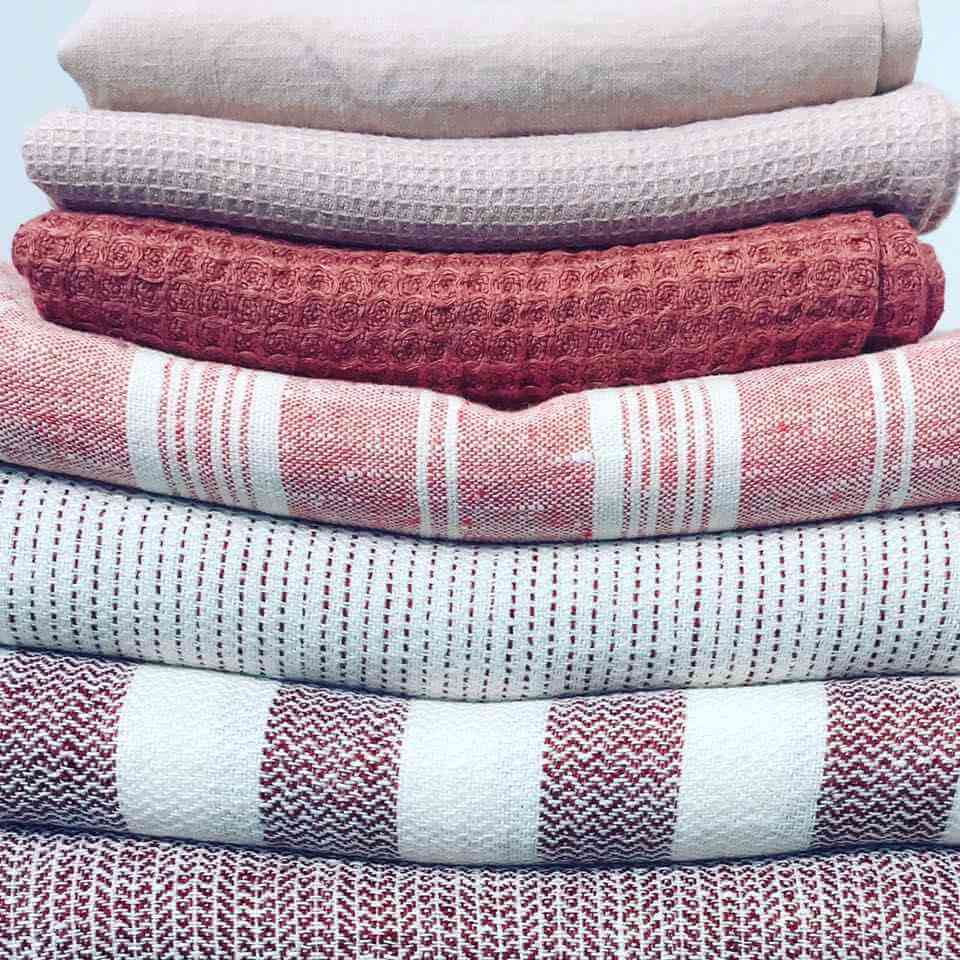
With gentle washing, moderate temperatures and dry storage, linen can remain useful and beautiful for many years. Browse our linen clothing and linen bedding collections.
2022-06-10
2020-07-08
2020-06-26
2020-07-08
Dear Smriti,
I would suggest not to starch your linen saree. It to some degree will destroy the natural softness of the fabric giving it a stiff feel unless this is the feel you are looking for.
Inga
2020-04-18
2020-04-20
Dear Jill,
Please check manufactures instructions first. My suggestion would be to wash according to their instructions and check if there is any shrinkage. If not then you could try higher temperatures, but do it gradually as there is a risk of shrinkage more than you would like to if you use too high temperatures.
Inga
2020-04-15
2019-08-28
HELP!
I washed my linen duvet cover in cold as instructed, gentle cycle and just a small about detergent.
There are now some lighter areas on the cover. I have read that may be as a result of detergent not completely dissolving... I used very sparingly...
Am now running another cycle of rinse only and hope that eliminates the blotches.
If you have any advice or suggestions I would appreciate it greatly!
Randolph
2020-03-25
Hey, thanks for the amazing article!
I brought a really nice black linen maxi dress and the washing label says 40 degrees wash... But 40 degrees Celsius seems really hot so I hand washed it using lukewarm water about 30-35 degrees and mild body soap. The color faded and the water looked brownish....cold water doesn't seem to work as well. I wonder is it natural for black linen to fade? Should I use hotter water? I'm afraid the dress will become grayish;)
Cheers x
2020-03-27
Hi Violette,
It would be the best to contact the seller for their comments, but it looks like quality of the fabric or dyeing technique was poor. It is natural that colour would slightly fade away over the time after number of washes, but it shouldn't happen at the first wash. Washing in the machine at the temperature up to 40 degrees should be ok.
Inga
2019-09-18
2019-06-08
I wash church linens a lot. To keep white, rinse and rinse again. To keep from ironing, get the linen item very damp, almost dripping, lay face down on a smooth surface (not painted or wood) like a countertop or washer top, and smooth out ALL wrinkles and bubbles, using a piece of a white t-shirt helps. Allow to air dry. It will be perfect! If you must iron, freeze the item still damp and iron face down with a dry iron. I use the air dry method for my linen pants but don't get them so wet, and they look great!
2019-05-23
2020-02-13
2020-02-21
Dear Chien,
You can't fully eliminate shrinkage of linen fabric. You can minimize it by washing below 40 degrees. Another option is to buy pre-washed linen fabrics.
Inga
2018-11-19
2018-10-18
Just got this beautiful flax woven top sheet from the antique flea market. The company where it came from is already closed. Vendor has no clue how to wash it. The tag only says c.1890 Woven Flax Top Sheet and no washing instructions or tag. It has some embroidery and detailed with double looped drawnwork on one edge. What is the best way to wash it. Would love to use it.
2018-07-12
2018-06-25
2018-06-01
Help! I bought fabric that is 55% cotton and 45% linen to make into panel curtains. There are no washing instructions for the fabric but the sales person told me I should never ever wash linen.
I would like to wash the fabric before sewing it into curtains in order to shrink it first so that I can wash the curtains in the future, when needed. Besides having the fabric shrink, what is the worst that could happen if I wash this fabric? Thank you! Robin
2018-05-14
I would like to have linen slipcovers made for my sofa & chairs. Could you please tell me what weight linen is most desirable for furniture slipcovers? Also, any special instructions for using linen slipcovers or anything else I should know before purchasing linen fabric for slipcovers?
Thank you in advance for any advice you can offer to me!
2018-04-22
2018-03-24
2018-03-14
Reading the various questions and answers it would appear that linen clothes should generally be washable, but in one answer you say that suits may need to be dry cleaned due to their construction and to follow the manufacturer’s recommendations. I have an off white pair of linen dress pants that say dry clean only. They are NOT from a suit. How risky would washing them in cold water be?
2018-02-15
2018-01-15
Thanks in advance for your help. My sister’s tenant recently washed her linen curtains. They have not been washed before. I know washing should help soften them but it seems to have done the opposite - they feel rough now (and shrunk). Any thoughts on what she should do. Maybe try re-washing them? I wondered if it might have been the detergent that was used..
Thanks
2018-01-20
Dear Jacqui,
The key is not to use high temperatures washing linen items that could have caused the shrinkage. You could use regular fabric softener for softness - that should help. Unfortunatelly there is no easy fix for undoing the shrinkage. You could try to hang linen curtains still wet after washing (that should do a bit of work, but definitely not all the way). Some linen curtains have double borders at the bottom, so you could regain the length by redusing the size of that border with a bit of sewing work (if you don't feel comfortable with that - take it to professional seamstress).
Inga
2017-12-13
2017-10-25
2017-10-25
Dear Carol,
First of all I would recommend to take a look at washing instructions. Be prepared that your linen curtains might shrink by couple of cm once you wash them. There is no special softener requirements. You could use regular fabric softener for this purpose. Steaming is a good idea as well - it should definitely work on big wrinkles.
Regards,
Inga
2017-09-11
What a great site! Looking for some softening tips...I've clearly read too much and am now a bit confused on best method to soften. I picked up a super cool square table cloth that I'd actually like to use as a scarf- but it's not quite "drap-ey" enough and a bit scratchy. Is there a wash method you would recommend? Thanks so much!
2017-09-14
Dear Melanie,
Thank you for your question. I understand you reffer to linen tablecloth that you are trying to turn into scarf. Even if it's linen -
recommendations would depend on the type of fabric that tablecloth is made. Obviously the softest linen you can get is using stone washing method, but at home conditions I would suggest to use regular fabric softener first and see the effect. Good linen is getting softer with every wash, so you'll need some patience in the process as well.
Inga
2017-09-03
2017-09-03
Dear Grace,
Thank you for your note. It's really unfortunate incident as my experience tells it might be very difficult to do that without a help of professional cleaner (I would consider that as an option). Some oil based stains could be cleaned with the help of WD-40 (yes WD-40, some people reported me success using lighter fluid as well). You could try spraying the stain with a little of WD-40, rub it in, and then wash in the machine as usual. This method could cause discoloration of the fabric, so test it on a small, inconspicuous area before applying this method.
Regards,
Inga
2017-10-09
I have had good results getting oil stains out with dawn dish soap. It has never bleached my fabric, but I have read that it can. So test a small spot first if you are worried. It may be too late for this, but I also never dry in a dryer until I get the stain out. Drying tends to make the stains stick. Clorox 2 has also been effective for me, and resolve carpet stain remover when almost nothing else will work. Let cleaner sit on stain over night, wash in the morning. Air dry, do it again until stain comes out.
2017-07-28
2017-07-09
2017-07-04
2017-07-07
Dear Torah,
It really difficult to comment on other manufactures clothing. The key thing is if they pre-wash fabric before making clothes (usually cheaper ones don't). I could say that all LinenMe clothes are pre-washed, so the shrinkage shouldn't be taken into account at all and you should buy your regular size.
Regards,
Inga
2017-06-20
2017-06-27
Dear Kiki,
The only difference between cotton linen and 100% linen is that cotton linen shrinks a bit more. So you should be even more careful with temperatures. I would suggest not to soak. Wash regulary with at lowest temperature (you could add fabric softener) and don't use tumble dryer.
Kind regards,
Inga
2017-06-15
2017-06-16
Dear Bhanu,
Depends if manufacture pre-washed the fabric before making clothes or not. We at LinenMe pre-wash all our clothes, so they don't shrink anymore when customer washes them.
Regards,
Inga
2017-06-14
My question is "Why does linen shrink?"
I know that fabrics made from animal products, such as wool and silk, are mainly proteins and they shrink in hot water because the heat of the water essentially cooks the protein in a manner that is similar to egg whites cooking - it is a one-way process that hardens the fabric.
But linen is not protein, in fact I thought it was mainly cellulose, so what is the process that causes it to shrink?
Thank you
Michael Walsh
(Engineer)
2017-06-16
Dear Michael.
Thank you for this question. Yes in fact linen (flax) is natural cellulose fiber. When the clothes are washed, they soak up a lot of water, swelling up. Then when they dry they shrink to their normal size, and start curling up which makes them a bit smaller than they originally were. The water molecules also act as a lubricant between the cellulose molecules, easing the way to get close to each other. This effect is strongest on fibers which absorb most water, especially cotton, linen, and wool. Hope this helps.
Regards,
Inga
2017-06-04
2017-06-04
2017-04-28
2017-04-16
2017-02-25
2017-03-17
Dear Barbara,
It really depends on the origins of this stain. Take a look at this article. It has nifty stain removal chart in it:
https://www.linenme.com/news/top-tips-for-taking-care-of-your-table-lin…
Regards,
Inga
2017-02-19
2017-01-07
2016-12-30
2016-12-13
Thank you for your linen care tips.
I have just bought few linen cloths for shirts. The shopkeeper said put the cloths in water before giving for stitching to avoid shrinking. But when I put into water the colors of cloths began coming out. Is there any tips to keep the colors without going while washing.
2016-12-22
Dear Jayan,
The only tip I could give you is to use the lowest possible temperatures in your washing machine and dryer. In this case I sense that it might be an issue with dying quality of the fabric you bought. You could check LinenMe fabrics they wouldn't have the issue you describe.
Inga
2016-11-26
2016-11-27
Dear Elwyn,
You have to look at manufacture instructions or contact them directly in case you lost them. It really depends on how the fabric was dyed or printed. If it is good quality fabric you should be able to wash it in low temperatured though it is also normal that after many washes the colours will slightly fade.
Inga
2016-11-06
2016-09-19
2016-09-19
Dear Selena,
Linen fabric shrinks that is the fact. Depending on the weaving technique it can shrink 2-5%. It shrinks the most after the first wash and even more if you use dryer for the first time. With linen clothes it is better to avoid dryer if possible, if you use it use lowest temperature setting. We make all LinenMe clothes from pre-washed fabric, but other manufactures make linen clothes from not washed fabric then it is the best to buy linen clothes one size bigger than your size.
Inga
2016-09-18
2016-09-08
2016-08-30
2016-09-16
Hi Gail,
You can try to add cornstarch to the rinse cycle (2 tablespoons cornstarch dissolved in 1 cup cold water) to add body and crispness.
Use spray-on starch or fabric sizing for areas like collars and cuffs that you want particularly crisp. The starch also helps to protect the linen from stains.
Regards,
Inga
2016-08-17
Hi, My mother accidentally washed my 100% linen bedding with regular detergent and then put it in the dryer until it was hot/dry. It was very soft initially, but it is rough and crackly now. I think it will still fit my bed, but will it soften again with time? Is there anything I can do to soften it (put natural oils back in it somehow, or wet it again and dry it gently), or will it soften as it absorbs moisture from the air?
Thank you!!
Sarah
2016-02-09
2014-09-14
2015-11-17
2016-03-09
2015-10-08
Hi
Can you please give me some suggestions regarding pre-stitching care for linen? I have linen fabric and it is of good quality. I want to make shirts and trousers out of it. But I am not very sure what precautions should i take before getting it stitched and how linen stitching is different from cotton stitching?
2015-03-30
2015-07-07
2016-10-09
Dear Marina,
If it is LinenMe dress then I could guarantee that it is safe to wash. If itis not then I would suggest to check manufacture recommendations as some risks could be involved (colours, shrinkage, etc.).
Inga
2015-07-18
2014-09-24
2014-04-30
2015-03-31
2016-10-02
Dear Leslie,
Of course it is always recommended to check manufacture instructions, but if your drapery panels are made from a high quality linen fabric then you could steam them while hanging and it will help to remove wrinkles.
Inga
2014-10-14
2014-04-13
Today I participated on a 1600-th century Kulturday. It was a detailed care instruction for the precious linnen fabric, do not- ever was or keep linnen in higher than 80 degrees celsius. It is good to iron damp linen, because the fibers get pressed together...- this was the take home message for me, I use heaps of linnen clothing, and I did not iron them at all, but allas many of them got damaged, because the fibers loosened up for the lack of ironing, strill remember no hotter than 80 degrees celsius, linnen crazy Marija Stockholm.
2013-12-31
Make that "storing", or "stowing", if you're feeling nautical! Either way, I'd heard that linen can rub itself to bits over time if folded against itself - hoping you can take some of the "myth-ery" out of it all! I love my linens! Ooh, just 1 more: do embroidered linens require linen thread materials for the embroidered areas not to pull/pucker?
2013-12-31
2013-10-25
Thanks for the information. My eyes opened wide from a sound sleep this morning after remembering my husbands brand new white linen shirt was dry in the dryer! I rushed to look at it hoping it wasn't ruined........it looks ok I think....wondering if I should wash it again now and let it hang to dry?
Pauline
2013-10-25
2013-09-15
2013-09-08
2013-07-27
2019-10-21
Hi Deepa,
Theoretically you can wash (using lowest temperatures only), but you should be aware of shrinkage. First you need check the label for manufacture's recommendations. Strictly follow them. If linen curtains are made from prewashed fabric (as all LinenMe curtains) then the shrinkage would be very minimal if any (if you wash in lowest temperatures), but if your linen curtains are made from not washed fabric then the shringage could be 3-5%. For drying I wouldn't suggest dryer, hang your curtains wet and they will dry.
Inga
2019-12-26
I bought some pure linen bedding last year, at great expense. Looks lovely on the bed but is mega scratchy! Washed in line with manufacturer's instructions, and it's been washed loads of times. It is SO scratchy I am thinking of giving it to charity (although why should I inflict scratchy bedlinen on them?!), and wasting over £200.
Any ideas please?
2013-05-11
2013-10-09
2015-05-14
2020-01-20
Hi Yvonne,
It's difficult to comment not seeing the product, but I believe it is the type of linen fabric (and weav) that you bedding is made of. At LinenMe we use stonewashed linen fabric to make our linen bedding so it is very soft from day one. Having said that linen should get softer with every wash. You could even try to use regular fabric softener with you bedding before you give it away to charity.
Inga
I know this article is old but it’s so helpful. I’m desperate for info on my situation:
I have 100% linen bedsheets in a dark charcoal colour. I need to disinfect them (covid!), but how can I do that without hot water or bleach? What would happen if I wash them at 60C?