
Updated: October 2026 — This article has been reviewed and expanded for accuracy and safer preparation.
Reusable beeswax wraps can replace disposable film for sandwiches, snacks, bread, cheese and bowls of cold leftovers. Making them at home is also a useful way to repurpose a clean linen napkin or fabric offcut that is no longer suitable for the table.
The method is simple, but wax and heat require care. Beeswax melts at a relatively low temperature, so there is no need for a very hot oven. Work slowly, keep the wax away from flames and never leave it heating unattended.

What you need
- Clean, tightly woven linen or cotton fabric
- Food-grade beeswax pellets or finely grated food-grade beeswax
- Pinking shears or ordinary fabric scissors
- A baking tray and greaseproof or baking paper
- A dedicated natural-bristle brush or silicone brush
- Oven gloves and a hanger or indoor drying line
Use equipment that you are happy to reserve for wax projects because hardened beeswax can be difficult to remove. Keep the work area ventilated, protect surrounding surfaces and keep children and pets away while the wax is hot.
Choose food-grade wax from a traceable supplier. Do not use scented candle wax, coloured craft wax or an unknown blend for a wrap that will touch food.
1. Select and prepare the fabric
Choose a clean piece of lightweight or medium-weight fabric with a close, even weave. Linen works well because it is strong, flexible and easy to handle once coated. Avoid fabric with loose yarns, heavy texture, metallic decoration or finishes that are not intended for food contact.
Wash the fabric first with an unscented detergent, rinse it thoroughly and let it dry. Ironing it flat helps the wax spread evenly. Cut the cloth to the sizes you will actually use: a small square for snacks, a medium piece for cheese or sandwiches, and a larger one for covering a bowl.
Pinking shears create a zigzag edge that helps reduce fraying. Ordinary scissors also work, but a heavily fraying edge may need a narrow stitched hem before waxing.
2. Arrange the tray and add beeswax
Line a baking tray with paper and place the fabric flat on top. Sprinkle a light, even layer of beeswax pellets across the surface, paying attention to the edges and corners. It is easier to add a little more wax later than to remove a heavy, uneven coating.
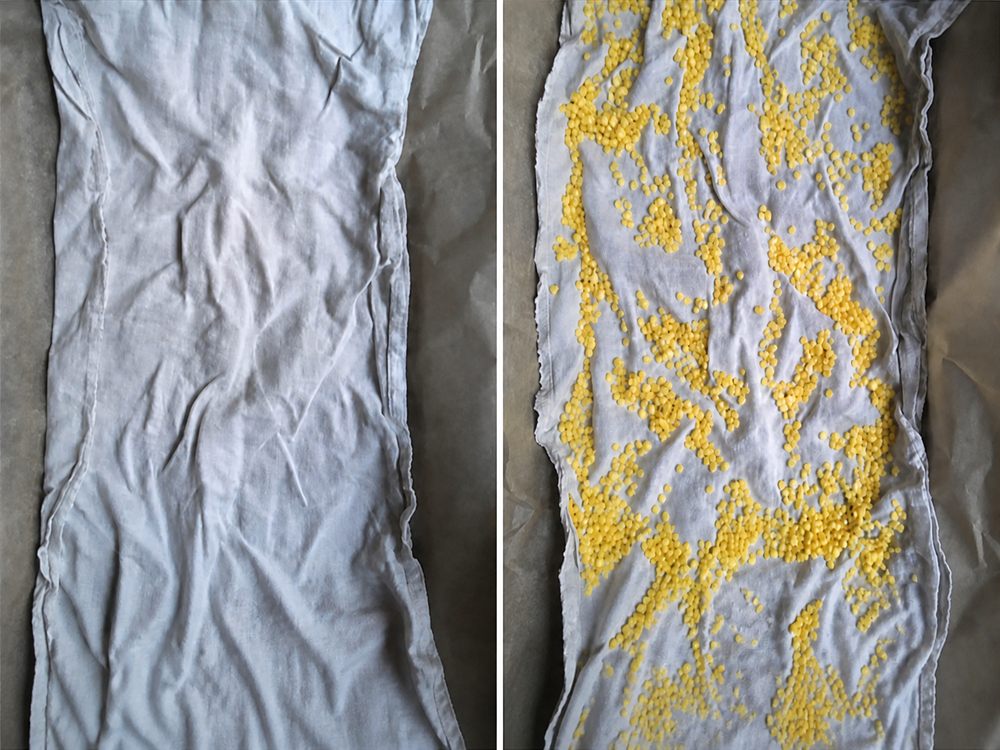
The exact amount depends on fabric weight and size. Aim to saturate the fibres without leaving thick pools on top. Too little wax creates dry patches; too much produces a stiff, flaky wrap.
3. Melt the wax at a low temperature
Preheat the oven to approximately 80–90°C (175–195°F). Place the tray in the oven only until the pellets have melted, usually a few minutes. Watch continuously and remove the tray as soon as the wax becomes liquid.
Use oven gloves and keep the tray level. Never use a grill or broiler, place wax near an open flame, or heat it unattended. If the oven cannot maintain a low temperature reliably, use a controlled double-boiler method to melt the wax and brush it onto warm fabric instead.
Brush the melted wax across the cloth in a thin, even layer. If small dry areas remain, add a few pellets and return the tray briefly to the low oven. If wax pools on the surface, place a second piece of prepared fabric over the first to absorb the excess, then separate the layers while warm.
4. Cool and shape the wrap
Lift the fabric carefully by two corners once it is cool enough to handle but before the wax has fully hardened. Hold it for several seconds or drape it over a clean hanger until the coating is cool, firm and no longer tacky.
The wrap should feel flexible rather than brittle. Warm it between your hands and fold it around food or over a container; gentle hand pressure helps the edges hold together. You can leave the cloth as a simple square or sew an uncoated piece into a pouch before applying wax.

How to use beeswax wraps safely
Beeswax wraps are intended for cool food and room-temperature storage. Use them for bread, cheese, fruit, vegetables, sandwiches and bowls of chilled leftovers. Do not wrap hot food because heat can soften the coating and transfer wax.
Avoid direct contact with raw meat, raw fish and other foods that require high-temperature sanitising. A wax-coated cloth cannot be washed with very hot water without damaging the coating. People with an allergy or sensitivity to bee products should not use beeswax wraps.
As with any reusable food-contact item, discard a wrap if it develops mould, an unpleasant odour, deep staining or damage that cannot be cleaned.
Cleaning, storing and refreshing the coating
Wipe or gently wash the wrap with cool water and a small amount of mild dish soap. Do not soak it, scrub it with an abrasive pad, put it in a dishwasher or washing machine, or expose it to a microwave, oven, radiator or other heat source.
Let the wrap air dry completely before folding it. Store it in a cool, dry drawer away from direct sunlight. With regular use, folded areas may develop creases and the coating may become thin. Refresh it by repeating the low-temperature process with a very small amount of additional wax.
The useful life depends on how often the wrap is used and cleaned. Rewaxing extends it, but a cloth that no longer cleans properly should be retired rather than continually recoated.
A practical way to reuse linen offcuts
A homemade beeswax wrap will not eliminate every form of kitchen packaging, but it can replace disposable film in several everyday situations. Starting with a clean, reusable fabric offcut gives an existing textile another purpose and allows you to make sizes that suit your own containers and lunch boxes.
Explore LinenMe’s linen napkins and linen fabrics for future sewing and kitchen projects.
This is Fantastic! A great way to keep all your Kitchen items Fresh!