
Updated: 17 October 2026 — expanded with practical guidance on fabrics, sizing, seasonal comfort, colour and care.
Choosing bed linen is easier when you start with how you sleep, how you want the bed to feel and how much care you are prepared to give it. The right bedding should fit properly, feel comfortable through the seasons and become part of a bedroom you enjoy returning to. This guide explains what to compare before you invest, from fabric and sizing to colour, thread count and washing.

What should you consider before buying bed linen?
Begin with the practical details. Check the dimensions of your mattress, duvet and pillows rather than relying only on labels such as double or king, because sizes vary between countries and makers. For a fitted sheet, measure the mattress depth as well as its width and length. Then think about whether you sleep warm or cool, whether you prefer crisp or relaxed bedding, and how often the bed linen will be washed.
A simple set usually includes a duvet cover and pillowcases. Add a fitted linen sheet or flat sheet according to your preference, and consider spare pillowcases for an easy midweek refresh. Coordinated pieces create a calm look, while compatible colours make it easy to mix sets over time.
Which bed linen fabric is best?
The best material depends on the feel and performance you value. Polycotton is generally inexpensive and quick to dry, but synthetic fibres can make it feel less breathable. Cotton is familiar, soft and widely available, with a finish that ranges from crisp percale to smooth sateen. Silk feels smooth and luxurious but usually needs more delicate care.
Pure linen is breathable, moisture-managing and durable. Its natural texture gives a relaxed appearance, while stone washing softens the fabric from the first use. Linen also helps create a comfortable sleep environment in both warm and cool weather, making linen bedding a practical year-round choice. If you are comparing the two most common natural options, see our guide to linen versus cotton.
Does thread count matter for linen?

Thread count measures how many threads are woven into a square inch of fabric, but it is not a universal quality score. Linen fibres are naturally thicker than cotton fibres, so a high cotton-style thread count is not the right way to judge linen. Fibre quality, yarn, weave, fabric weight, finishing and construction all affect how the finished bedding feels and lasts.
Look for transparent information about the material and maker rather than choosing by the largest number on the label. Well-made linen should feel substantial without being stiff, have secure seams and become softer with washing. Our linen glossary explains thread count, stone washing and other useful fabric terms.
How do you choose bedding for every season?
Choose layers that can be adjusted instead of relying on one heavy combination all year. In warmer weather, a linen sheet or lightweight duvet cover helps moisture evaporate and avoids unnecessary bulk. In colder months, keep the same breathable bed linen and add a warmer duvet or a wool throw. This gives you insulation without losing the dry, comfortable feel of natural fabric.
If you often sleep hot, prioritise breathable fabrics and lighter layers, keep the room ventilated when conditions allow and avoid dense synthetic bedding. Our guide to keeping cool at night has more practical ideas.
What colour bed linen should you choose?
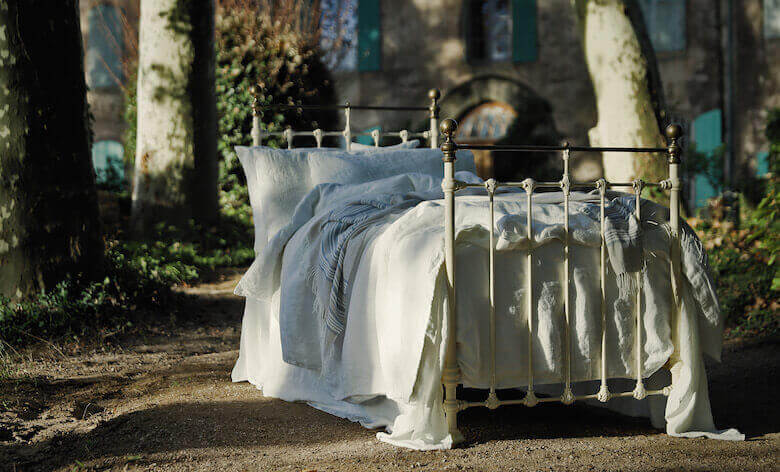
Because the bed is usually the largest feature in the room, its colour can set the mood. White, natural flax, soft grey and muted neutrals create a calm foundation and are easy to combine with throws and cushions. Deeper greens, blues and earthy shades add character while still working with natural materials.
You do not need every piece to match. A restrained palette of two or three compatible colours lets you mix duvet covers, sheets and pillowcases without making the room feel busy. Consider the wall colour, curtains, floor and the daylight in the room. If you want to understand natural and dyed shades in more detail, read what colour linen is.
How should you care for linen bedding?
Always follow the product care label. In general, wash linen bedding with similar colours on a gentle cycle, avoid overloading the machine and use a mild detergent without bleach. Air drying is ideal; if you tumble dry, use a low setting and remove the bedding before it becomes completely dry. Linen does not need to be ironed unless you prefer a pressed finish.
Rotate between sets so each one has time to rest, and store clean bedding in a dry, ventilated place. Linen becomes softer with use and washing, while proper care helps protect its fibres and colour. See our complete guide to washing linen for step-by-step advice.
A quick bed-linen buying checklist
- Measure the mattress, duvet and pillows, including mattress depth.
- Choose a fabric that suits your preferred feel, temperature and care routine.
- Judge linen by fibre, weave, weight, finish and construction—not thread count alone.
- Build a flexible set with the pieces you actually use.
- Select two or three colours that work with the room and with one another.
- Check the care label before buying and allow for regular washing.
Good bed linen should work hard without feeling complicated. When the size, fabric and colour are right, the bed becomes comfortable, easy to care for and distinctly yours. Explore the LinenMe linen bedding collection to compare duvet covers, sheets, pillowcases and coordinated sets.
2020-09-25
2020-09-28
Dear Alison,
Thank you for your interest. We discontinued wine, but we have really wide choice of colours. Please check our bedding section , I'm sure you will find the colour you like.
Inga
Is the ‘wine’ coloured Bedding in this article available?